
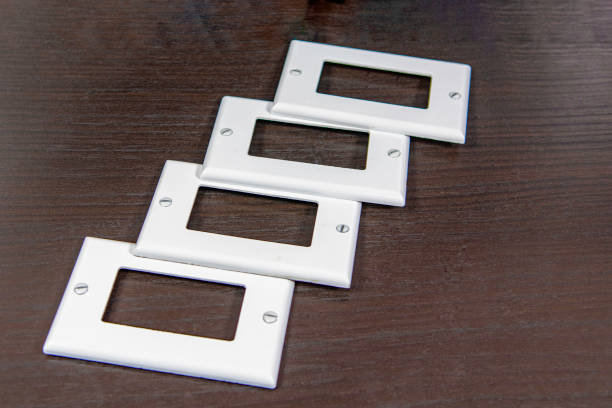
Replacing an outlet cover plate is one of the simplest upgrades in a home — it costs about $1 and takes two minutes. But while you’re back there, it’s worth knowing what normal looks like versus what should make you stop and call a professional. This guide covers both.
The Simple Case — Just the Cover Plate
If you’re only replacing a cracked, discolored, or outdated cover plate, this truly could not be easier. Turn off the light or unplug anything in the outlet just to be safe. Unscrew the single screw in the center of the plate, pull it off, line up the new one, and screw it back. Done. Cover plates come in standard, jumbo, and oversized sizes — if your old plate left paint shadows on the wall, go up a size to cover them.
Matching Your Outlets and Switches
If you’re updating one, consider updating them all in a room. Mismatched covers (some white, some ivory, some almond) are one of those things you don’t notice until you notice them, and then you can’t stop. A pack of 10 matching covers runs about $10 and gives a room a cleaner, more finished look instantly.
What to Look For While You’re Back There
With the cover off, take 10 seconds to look at the outlet itself. You’re not doing electrical work — just looking. A few things are normal: slightly dusty, wires visible going into the back, maybe some discoloration from age. A few things are not normal and mean you should put the cover back on and call an electrician.
Stop and Call an Electrician If You See This
Call a licensed electrician — don’t proceed — if you see: scorch marks or black discoloration around the outlet, wires that look melted or have bare copper showing outside the connectors, an outlet that feels warm or hot to the touch, or wiring that looks frayed or bundled with electrical tape. These are signs of a wiring problem that can cause fires. They’re not common, but they’re important to catch.
GFCI Outlets — What They Are and Where You Need Them
If you’re in a bathroom, kitchen, garage, or outdoor area and the outlet has two small buttons labeled TEST and RESET, that’s a GFCI outlet. These are required by code in wet areas because they cut power instantly if they detect a current leak. If your bathroom or kitchen doesn’t have these, it’s worth upgrading — a GFCI outlet runs about $15 and is a genuine safety improvement.
Small Upgrade, Big Difference
Fresh, matching outlet covers are one of those details that make a room feel updated without anyone knowing why. It’s two minutes per outlet, costs almost nothing, and is a perfectly safe first electrical project for a total beginner.
When in doubt contact a professional.
Disclosure: This post contains affiliate links. If you click and make a purchase, FourByFourDIY earns a small commission at no extra cost to you
 FourByFourDIY
Leave a comment