
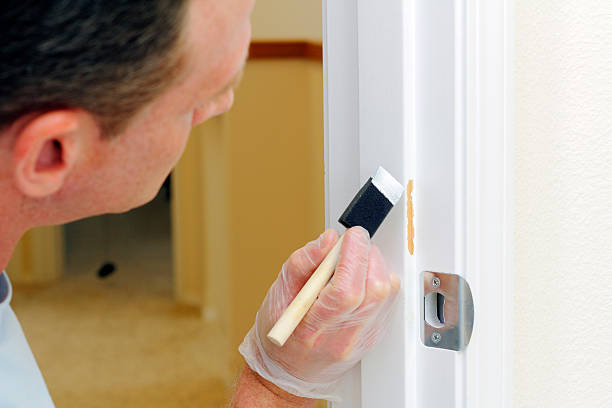
Knowing how to touch up paint without it looking obvious is trickier than it seems — not because it’s hard, but because most people do it wrong. You patch a scuff on the wall and the touch-up ends up drawing more attention than the original damage. Here’s how to make repairs that actually blend.
Why Touch-Ups Usually Look Bad
Fresh paint is shinier than aged paint, even with the exact same can. It also tends to go on thicker than the original coat. Both of these create a visible patch. The fix isn’t better paint — it’s better technique and managing your expectations about what “matching” actually means on an aged wall.
Start With the Right Paint
If you have leftover paint from the original job, great. Use that. If not, bring a paint chip or a photo to the hardware store for color matching — modern machines are very accurate. Make sure you also match the sheen (flat, eggshell, satin, semi-gloss). This is where most people go wrong. A flat touch-up on a satin wall will always look different even if the color is perfect.
Let the Repair Dry Completely First
If you patched drywall or filled a nail hole, the compound must be fully dry before painting — usually 24 hours minimum. Painting over damp compound causes the paint to sink and look different from the surrounding wall. Sand the patch smooth with 120-grit sandpaper, then wipe away all dust with a damp cloth and let it dry again.
Prime the Patch
Bare drywall compound absorbs paint differently than the surrounding painted wall. A quick coat of primer on just the patched area — before your touch-up paint — makes a huge difference. Let the primer dry fully, then lightly sand again if it raised the surface at all.
Apply Paint With a Roller, Not a Brush
This is the single biggest tip for seamless touch-ups: use a small foam roller, not a brush. Brushes leave streaks and don’t replicate the texture a roller creates. Use the same nap thickness as the original application. Feather the edges by rolling lightly out from the patch into the surrounding paint — don’t stop at the repair boundary.
When in Doubt, Paint the Whole Wall
If the paint is more than a few years old, or if you can’t match the sheen perfectly, the cleanest solution is to paint from corner to corner — the full wall, not just the patch. It sounds like more work but it takes less time than obsessing over a blended touch-up that still looks slightly off.
Just moved into a new home? Check out our guide on what to do when you move into a new house.
Disclosure: This post contains affiliate links. If you click and make a purchase, FourByFourDIY earns a small commission at no extra cost to you.
 FourByFourDIY
Leave a comment