
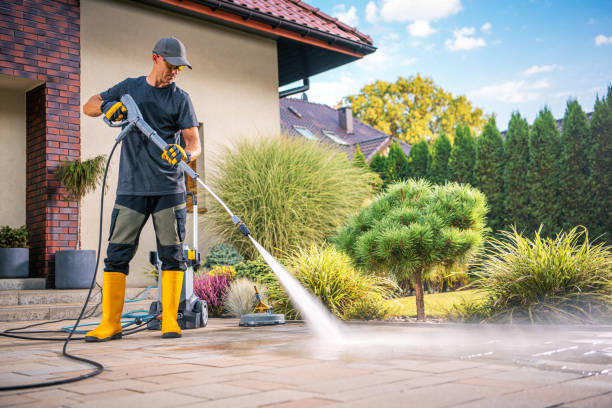
Learning how to pressure wash your driveway the right way can take it from stained and grimy to looking almost new in an afternoon. Oil stains, mildew, and years of dirt build up on concrete and asphalt, but the fix is simpler than most people think — as long as you avoid a few common mistakes that can actually damage the surface.
What You’ll Need
A pressure washer (electric models around 1,800-2,000 PSI are plenty for driveways), a fan-tip nozzle, a concrete or driveway cleaning solution, a stiff push broom, and safety glasses. You can rent a gas pressure washer from a hardware store for about $40-60 a day if you don’t own one.
Step 1 — Clear and Pre-Treat
Sweep away loose debris and move anything off the driveway. For oil stains or heavy grime, apply a concrete degreaser and let it sit for 10-15 minutes before you start washing. This pre-treatment step makes a huge difference in how clean the final result looks.
Step 2 — Use the Right Nozzle and Distance
A fan-tip nozzle (usually 25 or 40 degrees) spreads the water out and is much safer for concrete than a narrow jet, which can actually carve grooves into the surface. Keep the nozzle 8-12 inches from the ground and work in slightly overlapping passes, similar to mowing a lawn.
Step 3 — Work in Sections
Start at the highest point of the driveway and work toward the lowest, so dirty water flows away from cleaned areas instead of across them. Move steadily — lingering in one spot too long can etch the concrete.
Step 4 — Scrub Stubborn Stains
For oil stains that don’t lift with washing alone, scrub with a stiff push broom and a bit more degreaser, then rinse again. Old, deep-set oil stains may need two rounds of treatment.
Step 5 — Let It Dry
Driveways typically take a few hours to fully dry depending on sun and humidity. Keep cars and foot traffic off until it’s dry to avoid tracking dirt back onto the clean surface.
A Few Safety Notes
Never point a pressure washer at yourself, pets, or other people — the water pressure can break skin at close range. Wear closed-toe shoes and safety glasses, and keep the cord or hose away from the wheels if you’re using an electric model.
Just moved into a new home? Check out our guide on what to do when you move into a new house.
Disclosure: This post contains affiliate links. If you click and make a purchase, FourByFourDIY earns a small commission at no extra cost to you.


Leave a Reply