
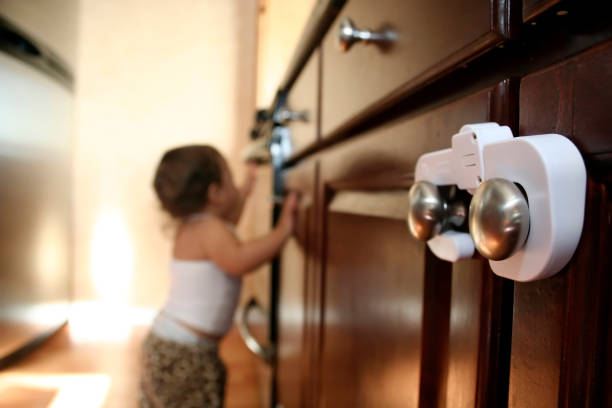
Learning how to install child safety cabinet locks is one of the most important baby-proofing tasks in any home with young children. Under the kitchen sink, cleaning supplies, medications, and sharp objects all need to be secured before a curious toddler finds them.
Types of Cabinet Locks
Magnetic locks are the cleanest option — they install inside the cabinet and are completely invisible from outside. You open them with a magnetic key that sticks to the outside of the cabinet. They cost about $25-30 for a pack and require a drill to install. Adhesive strap locks are the easiest to install — no tools required — but determined toddlers can sometimes defeat them. Spring latch locks install inside the cabinet and are opened by pressing a release button that’s out of a child’s reach.
What You’ll Need for Magnetic Locks
A drill, the magnetic lock kit, a pencil, and a tape measure.
Step 1 — Mark the Position
Open the cabinet door and hold the lock mechanism against the inside of the cabinet frame. Mark the screw hole locations with a pencil. The lock should be positioned so the magnetic catch on the door lines up with the locking mechanism on the frame.
Step 2 — Install the Lock Mechanism
Drill pilot holes at your marked locations and screw the lock body to the inside of the cabinet frame.
Step 3 — Install the Catch
Close the door and use the alignment tool included in most kits to mark where the catch should go on the inside of the door. Screw the catch in place.
Step 4 — Test With the Magnet
Hold the magnetic key against the outside of the cabinet in the correct position — usually marked with a small dot or indicator — and pull the door open. If it doesn’t release, adjust the catch position slightly until it aligns.
Priority Cabinets
Do these first: under the kitchen sink, any cabinet with cleaning products or medications, knife drawers, and any cabinet at child height with heavy or breakable items inside.
Just moved into a new home? Check out our guide on what to do when you move into a new house.
Disclosure: This post contains affiliate links. If you click and make a purchase, FourByFourDIY earns a small commission at no extra cost to you.


Leave a Reply