
If you’ve noticed your shower feels more like a light drizzle or your kitchen faucet takes forever to fill a pot, you’re dealing with low water pressure — and it’s one of the most frustrating problems in a home. The good news is that low water pressure usually has a simple cause and a simple fix. Here’s how to diagnose it and get your water flowing the way it should.
What Causes Low Water Pressure
Before you fix anything you need to understand what’s causing the problem. Low water pressure can come from a handful of sources: a partially closed shutoff valve, a clogged aerator, a failing pressure regulator, old or corroded pipes, or a problem with your municipal water supply. Knowing which one you’re dealing with saves you time and money.
Step 1 — Check If It’s the Whole House or Just One Fixture
Turn on faucets in multiple rooms and see if the low pressure is everywhere or just in one spot. If it’s only one faucet or one shower, the problem is local — likely a clogged aerator or showerhead. If it’s the whole house, the problem is at the source — either your main shutoff valve, your pressure regulator, or your water supply.
Step 2 — Check the Main Shutoff Valve
Your main water shutoff valve is usually located where the water line enters your home — in the basement, utility room, or on an exterior wall near the front of the house. Make sure it’s fully open. A valve that’s been partially closed — even accidentally — can cut your water pressure significantly. Turn it counterclockwise until it stops to ensure it’s fully open.
Step 3 — Check the Meter Valve
There’s also a shutoff valve near your water meter, usually at the street or where the line enters your property. Make sure this one is also fully open. If you’ve recently had any work done on your water line, someone may have closed it and not fully reopened it.
Step 4 — Clean the Aerators
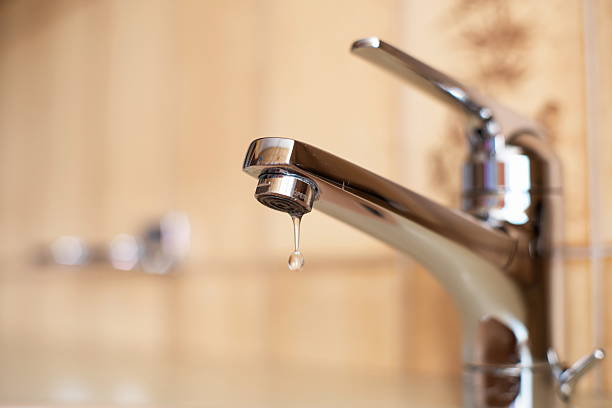
If the pressure problem is isolated to one or two faucets, the aerator is almost always the culprit. The aerator is the small screen at the tip of your faucet that mixes air into the water stream. Over time, mineral deposits clog it and restrict flow. Unscrew it by hand or with pliers (wrap with a cloth to protect the finish), rinse it under water, soak it in white vinegar for 30 minutes to dissolve mineral buildup, then reinstall. This often fixes the problem immediately and costs nothing.
Step 5 — Clean the Showerhead
Same concept as the aerator but for your shower. Unscrew the showerhead, soak it in a bag of white vinegar overnight if it’s heavily clogged, or just soak it in a bowl for a couple of hours for moderate buildup. The tiny holes in the showerhead get blocked by mineral deposits over time, especially in areas with hard water, and cleaning them dramatically improves flow.
Step 6 — Check Your Pressure Regulator
If you have low pressure throughout the whole house and the shutoff valves are fully open, your pressure regulator may be failing. The pressure regulator is a bell-shaped device on your main water line, usually near where the line enters the house. It controls the pressure coming into your home from the municipal supply. A failing regulator can cause pressure to drop or fluctuate. You can test your water pressure with an inexpensive pressure gauge that attaches to a hose bib — normal home water pressure is between 40 and 80 PSI. If yours is significantly below that, the regulator likely needs replacing. This is a job for a plumber if you’re not comfortable with it, though a confident DIYer can do it following the manufacturer’s instructions.
Step 7 — Consider Your Pipes
Older homes with galvanized steel pipes sometimes develop significant mineral buildup inside the pipes themselves over decades, restricting flow throughout the house. If your home is older and you’ve ruled out everything else, corroded pipes may be the issue. This is a bigger project — replacing the pipes — but worth knowing about so you can plan for it.
When to Call a Plumber
If you’ve checked the shutoff valves, cleaned the aerators and showerhead, and your pressure is still low throughout the whole house, it’s time to call a plumber. The issue is likely either a failing pressure regulator or pipe corrosion — both of which benefit from professional diagnosis.
Quick Summary
Low water pressure is frustrating but usually fixable. Start with the simplest causes first — shutoff valves and clogged aerators — before moving to more complex issues. Most people find the fix in the first two or three steps and never have to call anyone.
Just moved into a new home? Check out our guide on what to do when you move into a new house.
Disclosure: This post contains affiliate links. If you click and make a purchase, FourByFourDIY earns a small commission at no extra cost to you.


Leave a Reply